How to Store and Serve Every Bread We Bake
July 29, 2026
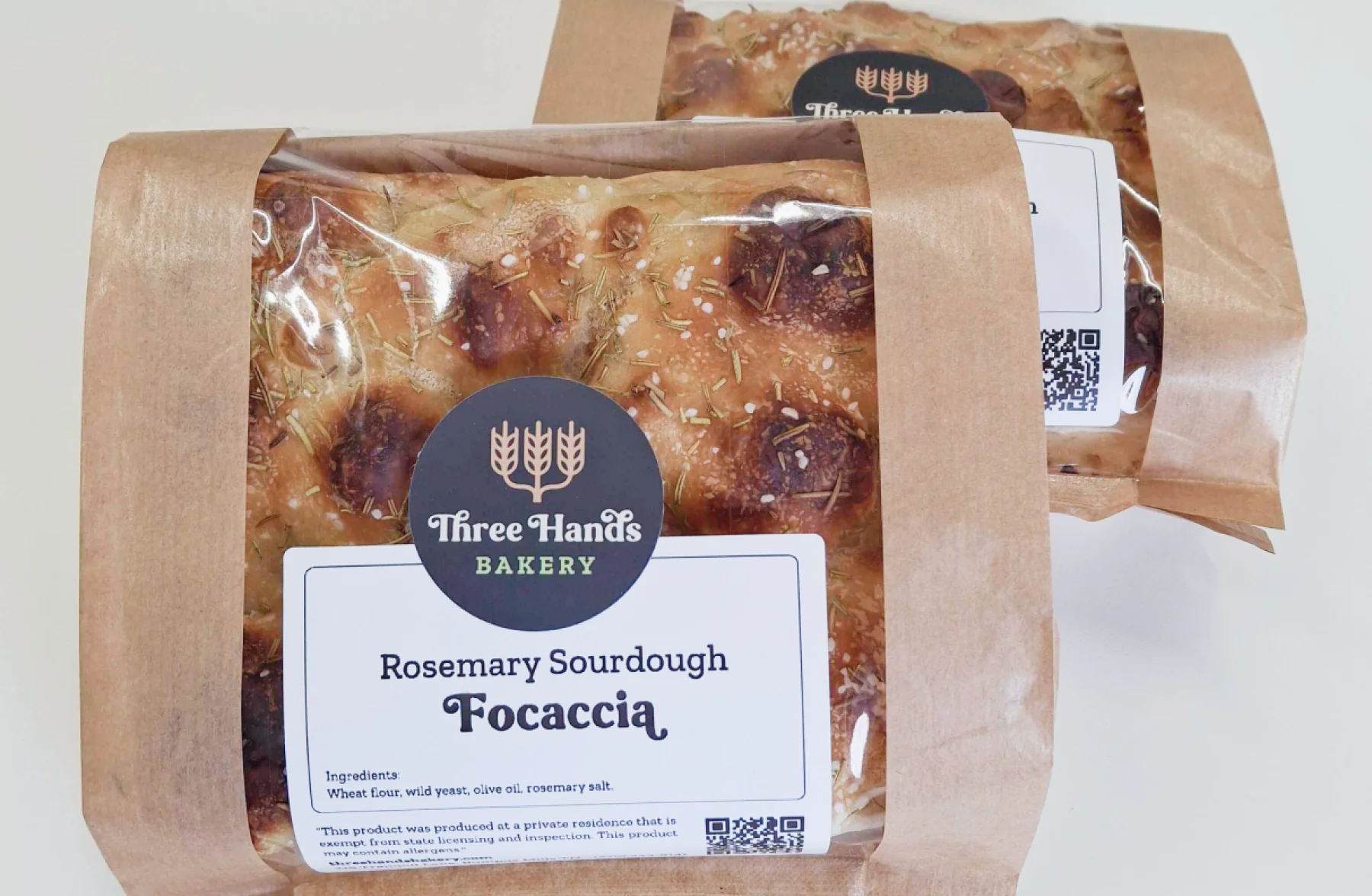
Why Our Bread Behaves Differently
Our bread has no preservatives. No dough conditioners, no shelf-life extenders, nothing to slow down what bread naturally does after it leaves the oven. That's the tradeoff for the flavor and texture you're getting: it won't last three weeks on a counter like a bag of grocery store bread. It'll last a few days, and then it'll do what real bread does: go stale.
Staling isn't spoiling. Stale bread is dry and firm, but it's not moldy and it's not unsafe. Mold takes longer to show up on our loaves than on commercial bread, because the fermentation process makes the dough naturally acidic, and mold doesn't like acid. If you see actual mold (fuzzy spots, discoloration, a sour smell that's off rather than tangy), throw it out. If it's just gone firm and dry, it's stale, not bad. That's what freezing and reheating are for.
Here's how to store and serve each bread we make, so you're getting the best version of it for as long as possible.
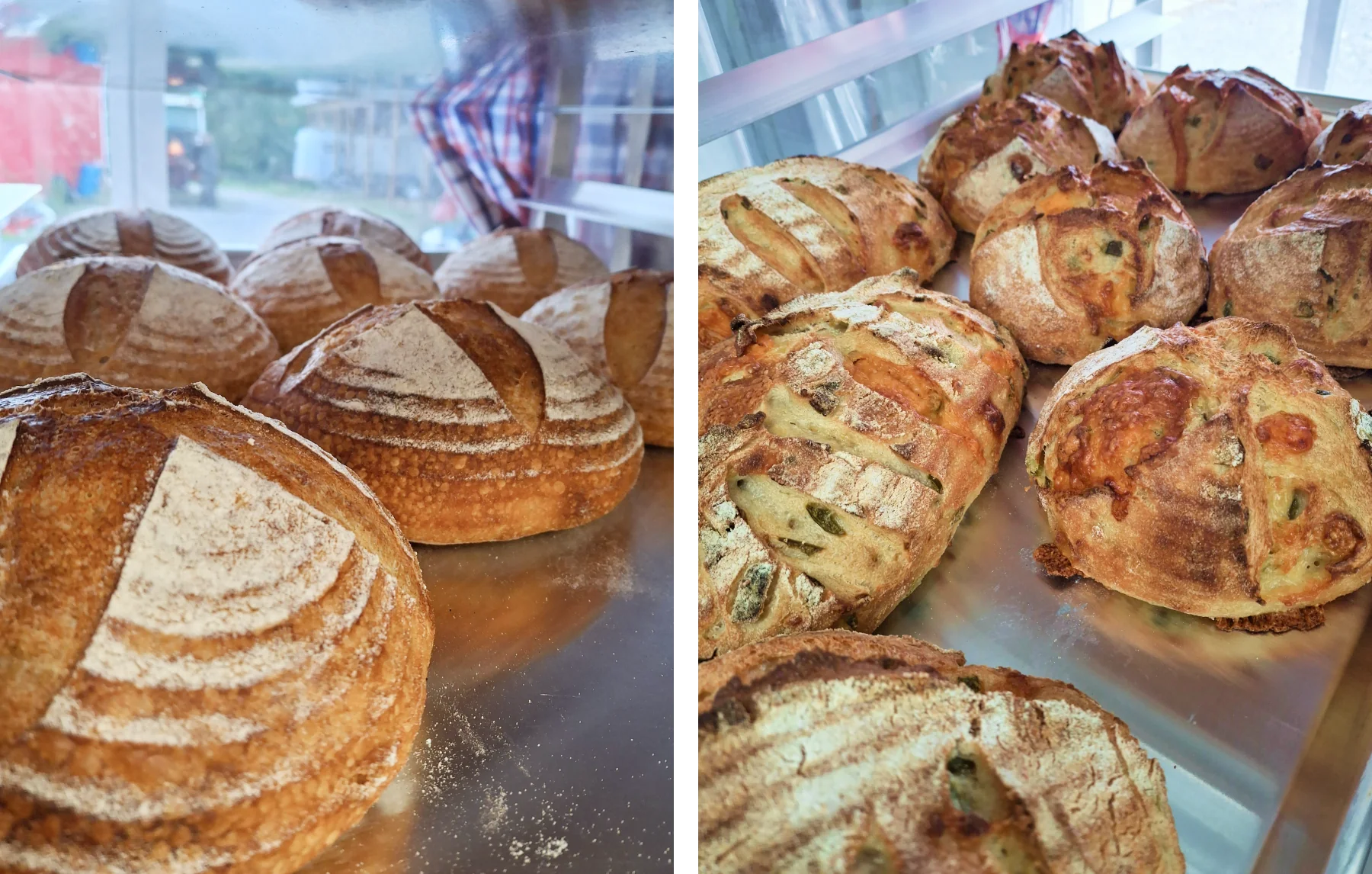
Classic Sourdough
Room temp for 2-3 days, cut-side down on a board or in a paper bag. Skip plastic. It traps moisture and turns the crust soft and chewy instead of crisp. The fridge is worse than the counter for this loaf on its own; cold temperatures actually speed up staling.
That said, we've found one exception worth passing on: a zip-lock bag in the fridge works fine if you're always going to toast it before eating. Toasting brings the texture back regardless, so if toasting is already part of your routine, the fridge is a fine place to keep it.
For anything past 3 days, freeze it. Whole or pre-sliced both work. Wrap tightly in plastic, then foil or a freezer bag, to keep air out. It'll hold for a month or more.
To serve: a few minutes in a hot oven brings the crust back to life. Slices go straight into the toaster, frozen or thawed. Skip the microwave. It steams the bread from the inside and turns a crusty loaf gummy.
Sourdough with Inclusions
Same rules as classic sourdough, with one exception: if it has cheese in it, treat it like a dairy product. Don't leave it out longer than a day or two, especially in warm weather. Move it to the fridge or freezer sooner than you would a plain loaf.
Everything else, freezing, toasting, avoiding the microwave, applies the same way.
We've found one exception worth passing on: a zip-lock bag in the fridge works fine if you're always going to toast it before eating. Toasting brings the texture back regardless, so if toasting is already part of your routine, the fridge is a fine place to keep it.
Baguettes
Baguettes stale faster than anything else on this list. Thin crust, lean dough, no fat to slow the process down: plan to eat it the day it's baked, or the next morning at the latest.
Room temp in a paper bag, never plastic. If you know you won't finish it in a day, freeze it instead of letting it sit out. Wrap tightly and it'll hold for a few weeks.
To serve: a hot oven for a few minutes is the only real fix once it's gone soft or firm. It won't be quite bakery-fresh again, but it gets close. Skip the microwave here more than anywhere else. It turns the thin crust tough and chewy instead of crisp.
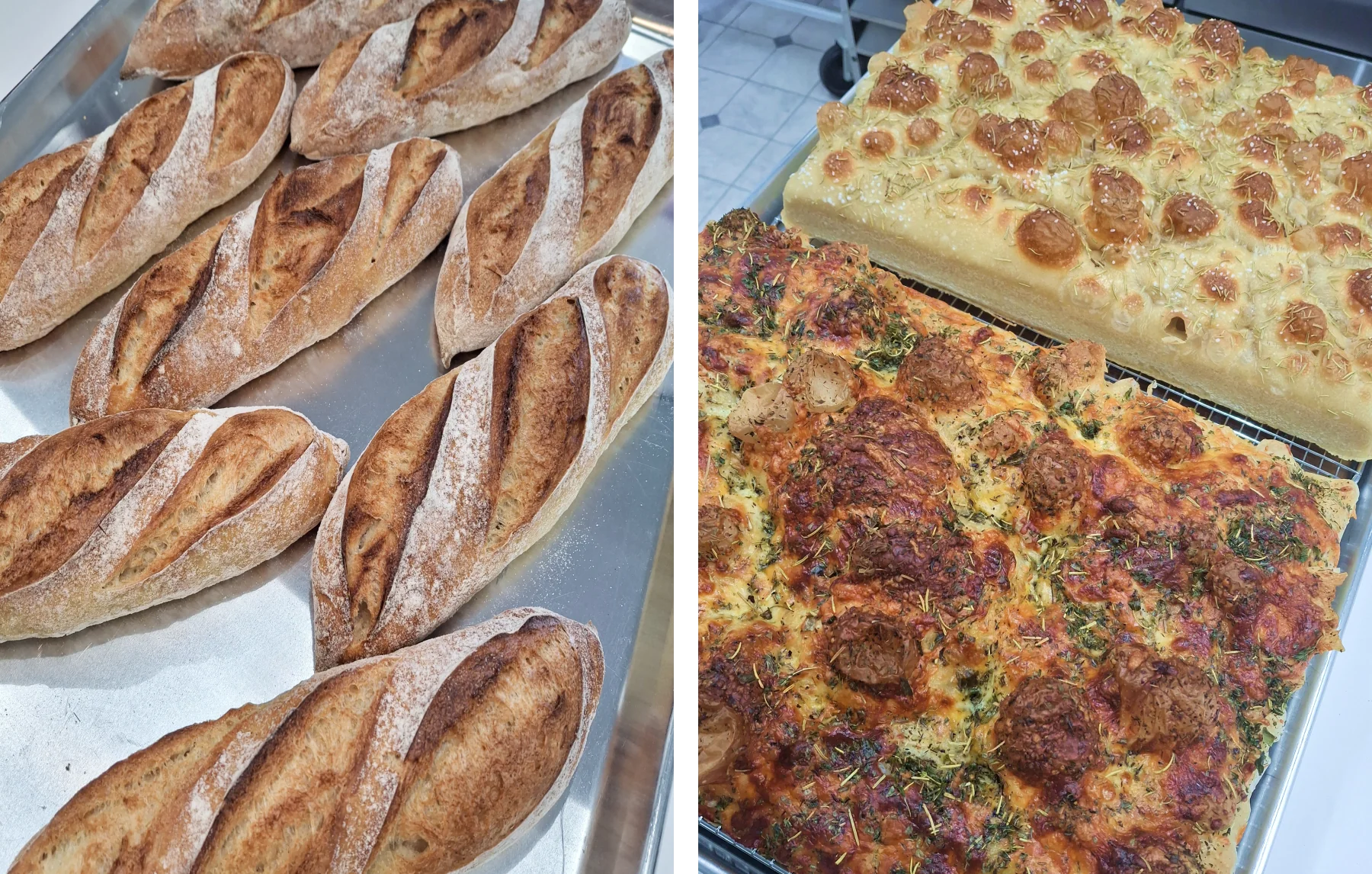
Rosemary Focaccia
Focaccia's olive oil content means it wants a different setup than sourdough: an airtight container or bag at room temp, not open air. It'll dry out fast if left uncovered. Good for about 2 days at room temp.
The fridge isn't kind to focaccia. The olive oil solidifies and the texture suffers. Freeze it instead if you're not eating it within a couple days, wrapped tightly.
To serve: oven, always. A few minutes at 350°F brings back the crisp top and keeps the inside soft. Microwave will make it dense and a little rubbery.
Three Cheese Focaccia
Same oil-and-moisture considerations as rosemary focaccia, plus the cheese callout: move it to the fridge after a day or two rather than leaving it out.
To serve: oven reheat is what makes this one worth it. It remelts the cheese and re-crisps the base. Microwave works if you're in a hurry, but you'll lose the texture.
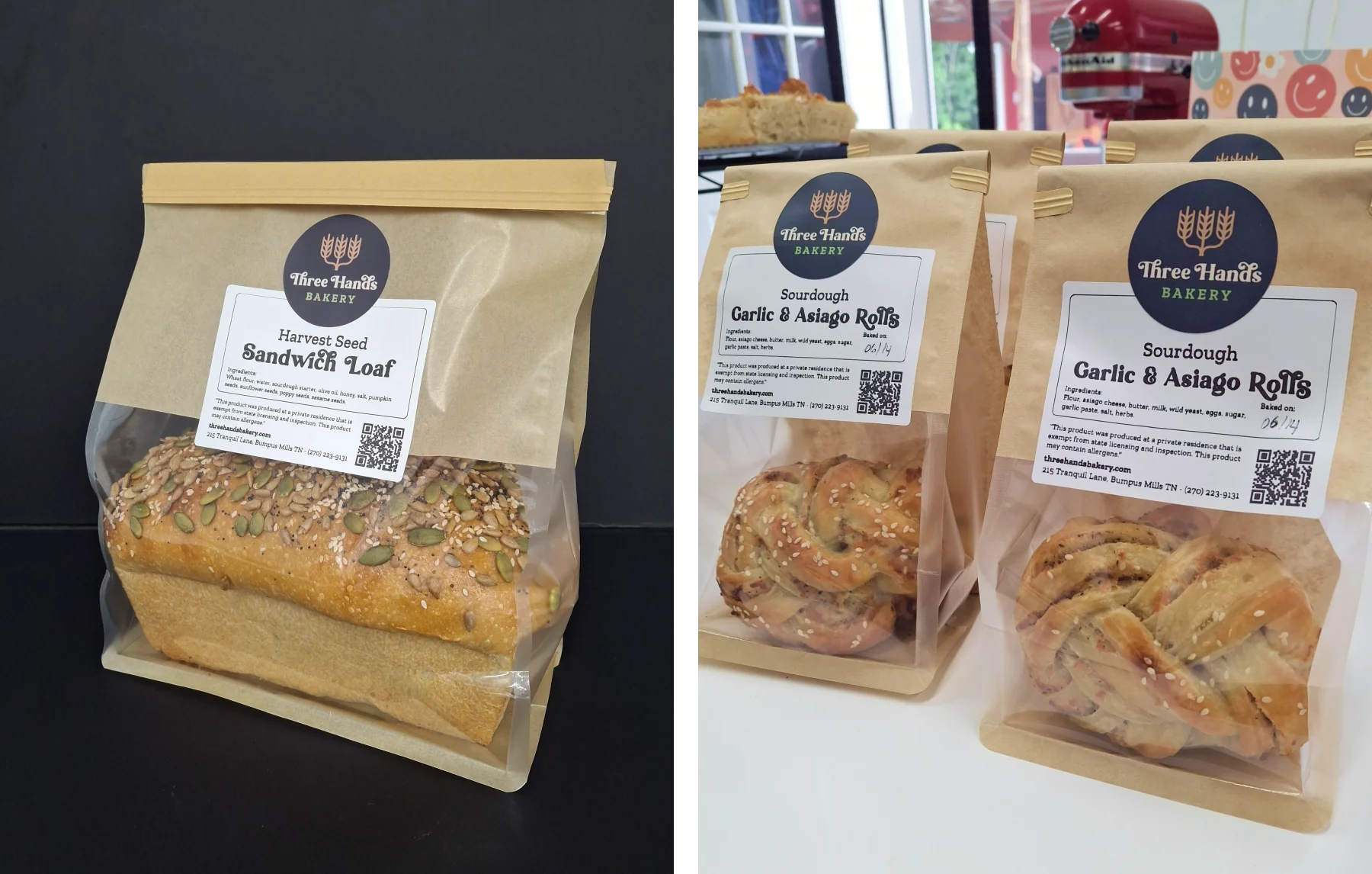
Seeded Sandwich Loaf
This one's built for a sealed bag at room temp. The softer, tighter crumb wants moisture retention rather than airflow. Good for several days that way, and the bag it comes in from us is already the right choice. No need to switch containers, just keep it closed between slices.
Best move for a loaf you'll use over time: slice it before freezing. Pull individual slices as you need them and toast straight from frozen. No thawing required.
Sub Rolls
A hybrid of sturdy crust and soft interior, so it sits between sourdough and the sandwich loaf. Paper bag for a day or two, freezer beyond that.
To serve: oven, cut-side up, a few minutes before you build the sandwich. It re-crisps the crust without drying out the inside.
Brioche Rolls: Sweet & Savory
This covers Cinnamon Rolls and Garlic & Asiago Rolls. Both are enriched dough, high in butter and sugar, which is why they behave differently from everything else on this list.
Store sealed at room temp for a couple days, or freeze for longer. They thaw and reheat cleanly because the fat and sugar keep them from drying out the way a lean dough does.
These are the ones that actually microwave well. The same fat and sugar content that keeps them soft also keeps them from turning gummy in the microwave. 10-15 seconds is usually enough to bring back that fresh-baked warmth. The Garlic & Asiago Rolls also do well in the oven if you want the top to crisp back up.
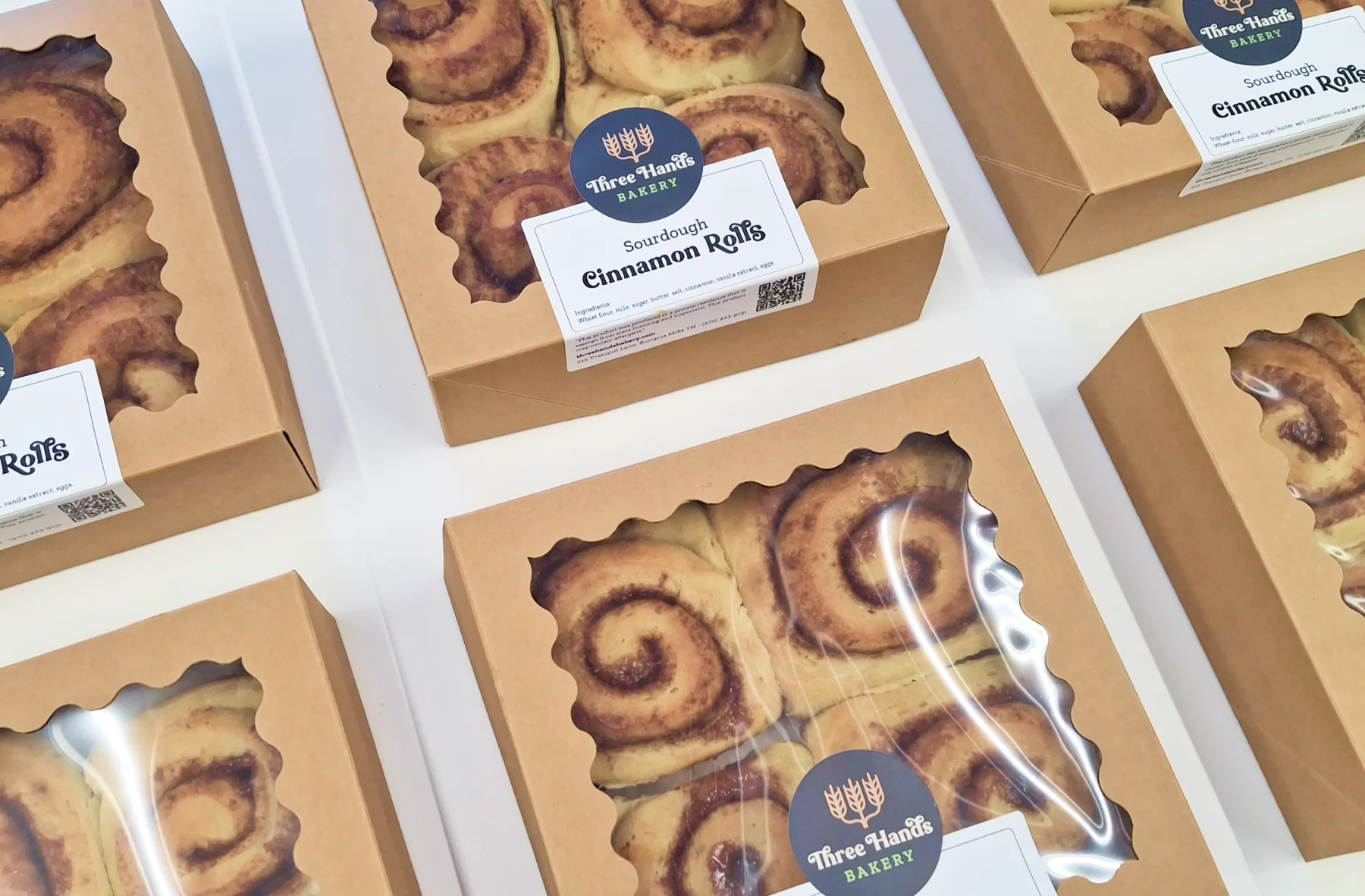
(brioche rolls) actually microwave well (...) 10-15 seconds is usually enough to bring back that fresh-baked warmth. The Garlic & Asiago Rolls also do well in the oven if you want the top to crisp back up.
What to Do with Day-Old Bread
Stale bread isn't a loss. It's a different ingredient. Firmer, drier bread actually works better than fresh in a few classic uses:
- French toast: dry bread soaks up custard without falling apart.
- Croutons: cube it, toss with olive oil, toast until crisp.
- Panzanella: torn or cubed bread mixed with tomatoes, olive oil, and vinegar; the bread softens as it sits and soaks up the dressing.
- Bread pudding: works especially well with the brioche rolls or seeded loaf.
If it's gone past stale into hard, this is exactly where it's most useful. Don't toss it. Repurpose it.
Preorder any of these breads Monday to Thursday at threehandsbakery.com/order, get 10% off, and your bread will be packed and waiting when you pick up on the weekend. ❖
